SoftwareHubwatt2023
HubWatt, managing energy communities
HubWatt sets up collective self-consumption schemes. We built the platform that manages participants, energy sharing and billing.
- The need
- In a collective self-consumption scheme, producers share their electricity with nearby consumers. Every month you need each meter’s load curve, work out who used what and bill everyone. By hand, it breaks down as soon as a scheme grows.
- What we built
- A space per energy community for participants, managers and administrators
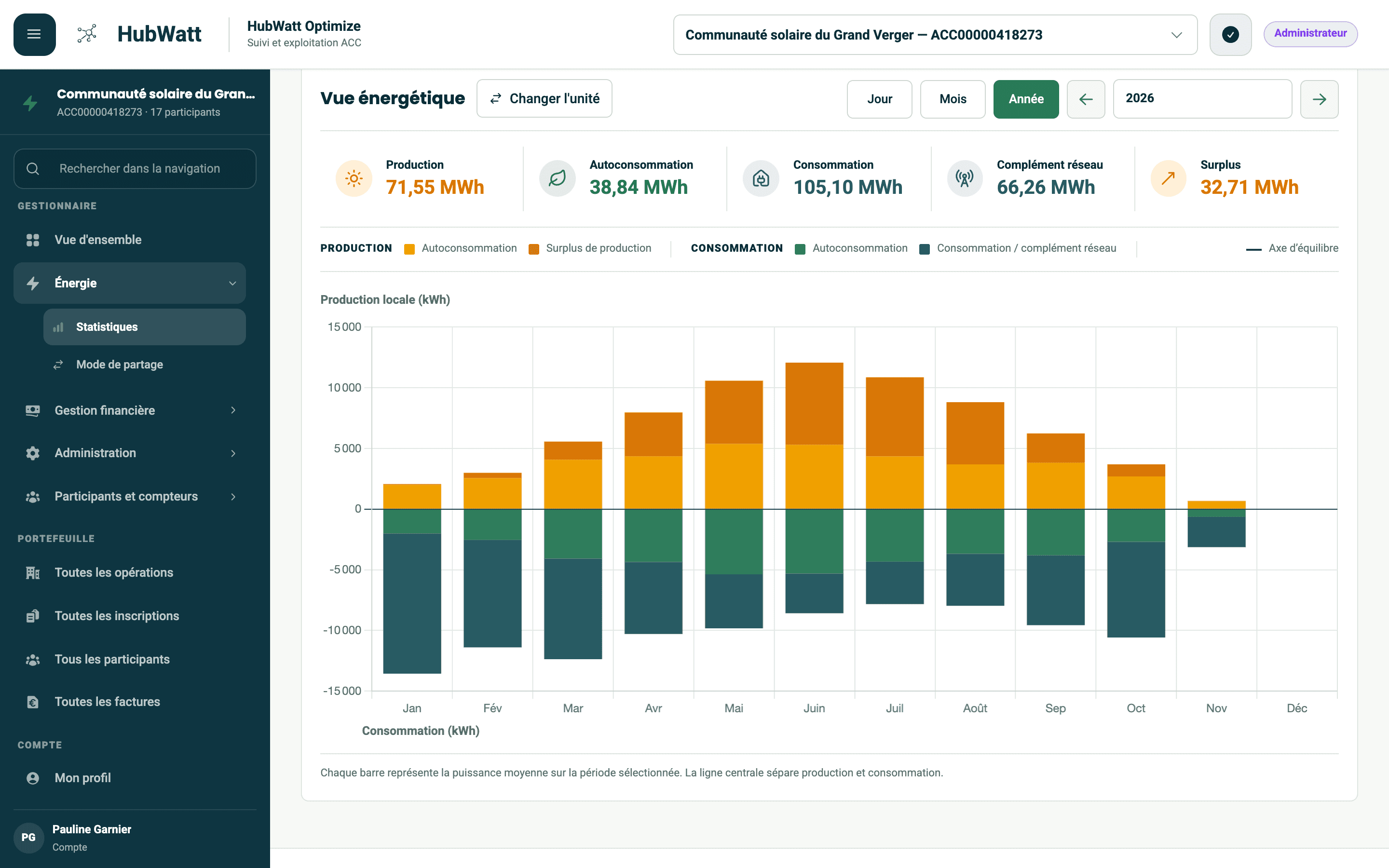
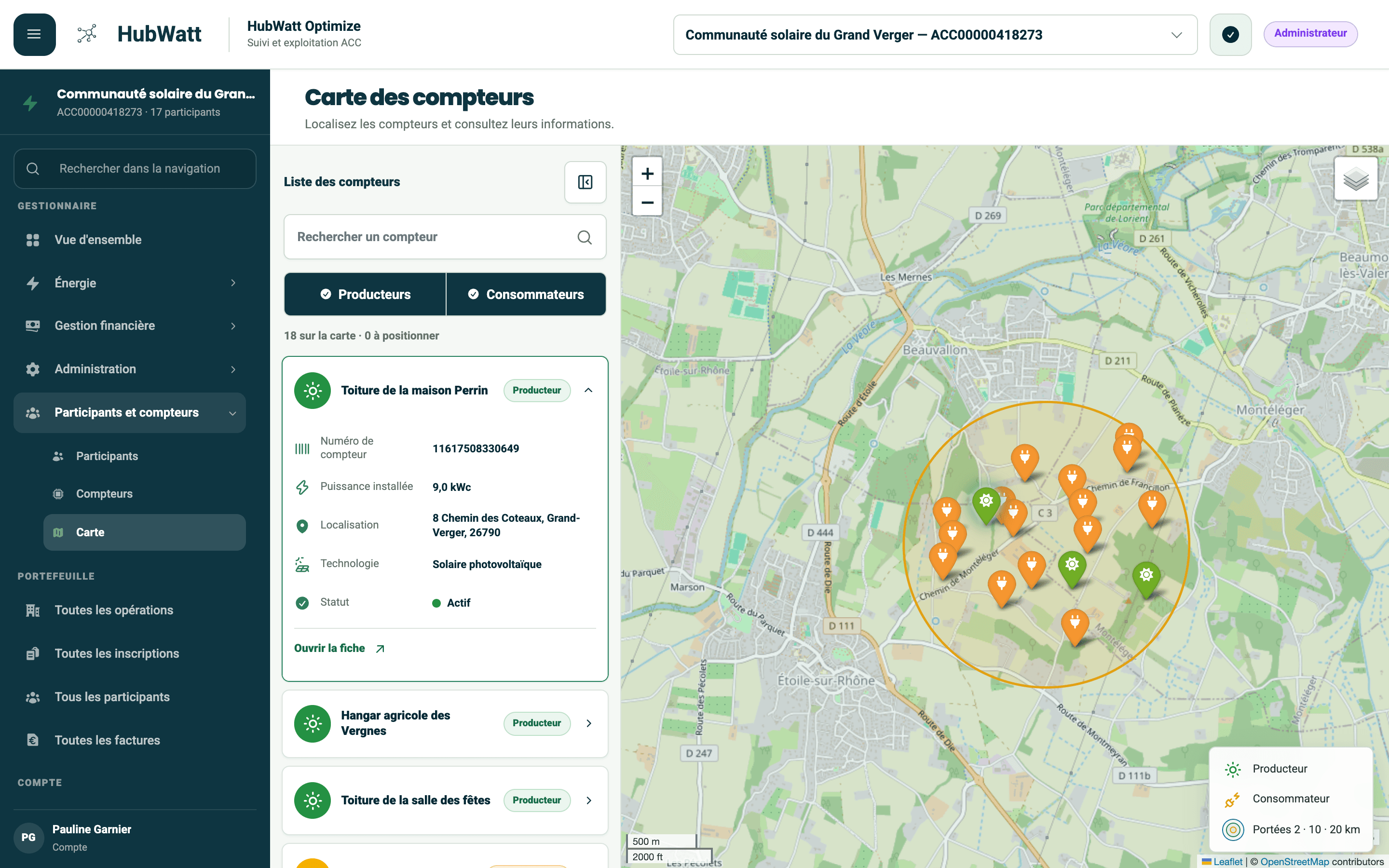
- Producers, consumers and their meters on a map, with daily, monthly and yearly statistics
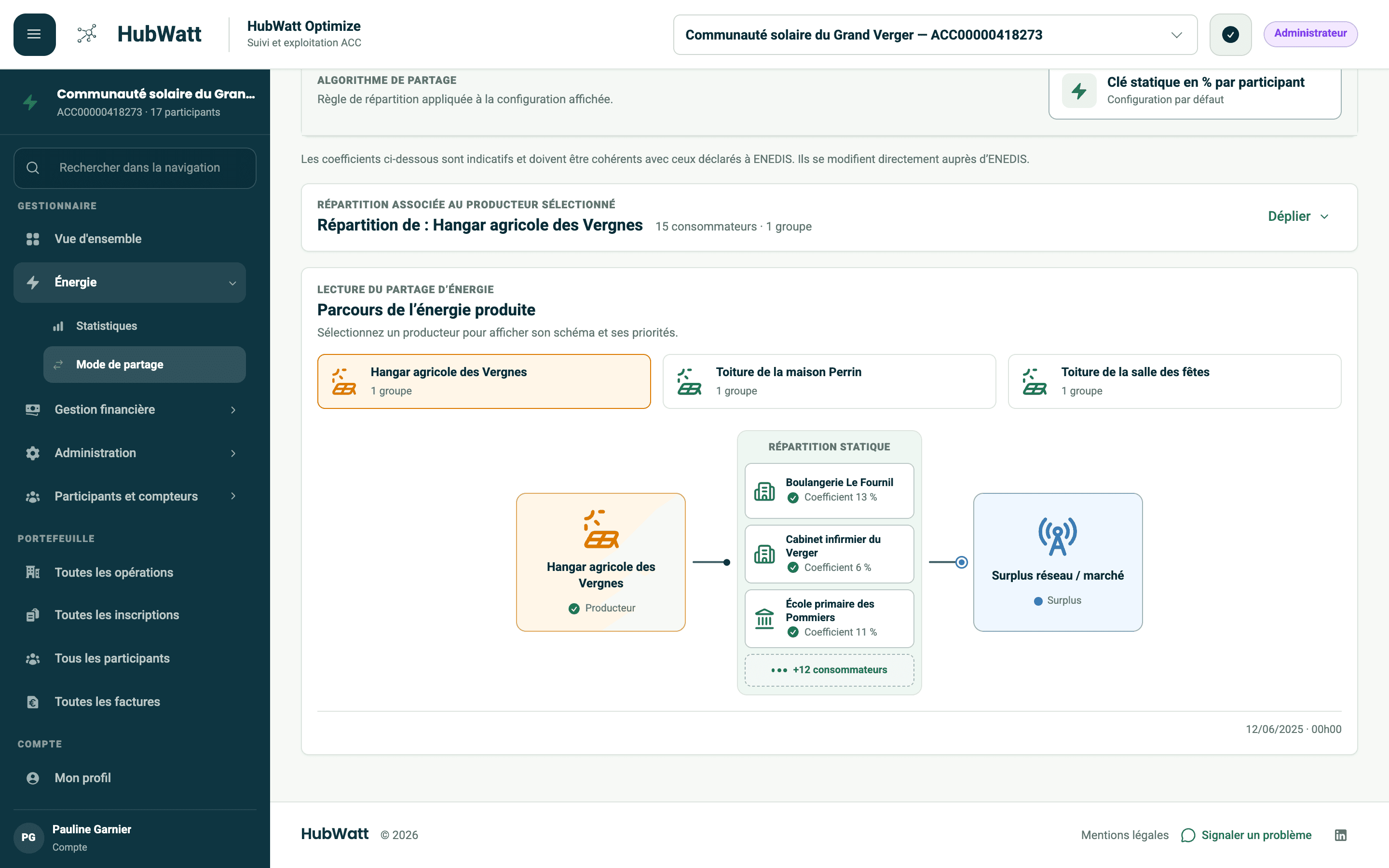
- Monthly sharing keys, static, dynamic, priority-based or equal
- Automatic retrieval of load curves through the Enedis API
- Paperwork, membership, mandate, online contract signing and the Enedis declaration
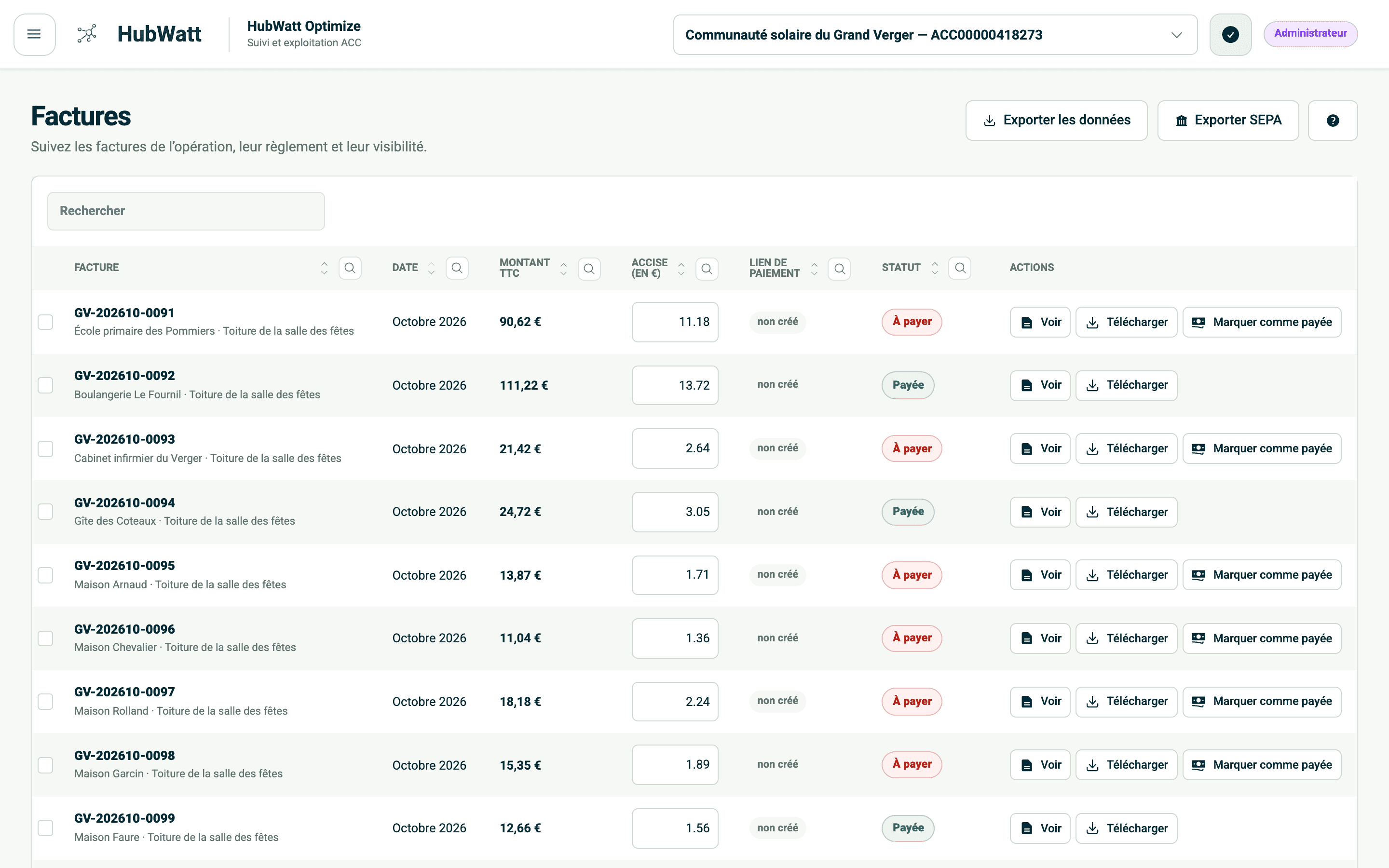
- Billing with price grids, PDF invoices, excise duty and SEPA direct debits
- How we worked
- We have worked with HubWatt since 2023, alongside their own developer. The hard part is the data. Enedis publishes curves gradually and sometimes leaves values out, and a meter can belong to several accounts. We added checks before every billing run and separated the pricing engine from contracts, so HubWatt can change its offers without touching the rest.
- Technologies
- Python
- FastAPI
- Neo4j
- React
- Vite
- Tailwind CSS
- Chart.js
- Docker
- The result
- HubWatt has studied more than 250 schemes since 2023 and deployed more than 50. The platform grows with them, with a new contract signed in 2026.